
Every planning cycle brings a new "channels to watch" list. What actually separates teams hitting revenue targets from teams treading water isn't which new channel they added, it's how few channels they're running well.
That's not a guess. Callbox's 2026 channel-concentration study found companies focused on three to five channels consistently outperform those spreading budgets across ten or more. Sprout Social's 2026 LinkedIn research separately found 89% of B2B marketers now use LinkedIn for lead generation. Two different studies, two different angles, the same conclusion: the channels most teams already run can work, if measured and resourced correctly.
• Companies focused on 3–5 channels outperform those spread across 10+ (Callbox, 2026)
• LinkedIn drives 80% of B2B social leads, at a cost per lead 28% lower than Google Ads (Sopro; Digital Applied, 2026)
• SEO delivers the highest average channel ROI at 748%, ahead of email (261%) and webinars (213%) (First Page Sage, via Konabayev, 2026)
• 67% of B2B teams still rely on last-click reporting despite buyer journeys averaging 15–25 touchpoints (Marketing LTB; TapClicks, 2026)
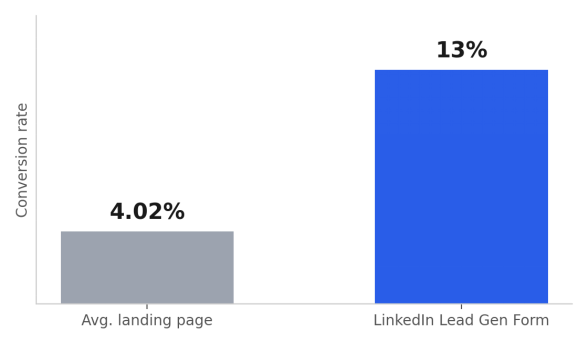
LinkedIn - 89% of B2B marketers use it for lead gen; 62% say it produces leads. Native Lead Gen Forms convert at 13%, over triple the average landing page rate (Sprout Social, 2026 - LinkedIn 2025 B2B Marketing Benchmark Report)
SEO - Ranks as the top ROI channel in HubSpot's 2026 State of Marketing Report - SEO leads close at 14.6% vs. 1-2% for outbound (SMARTe, 2026)
Email - Average B2B email ROI is roughly $36 per $1 spent, with conversion rates between 2% and 5% depending on segmentation
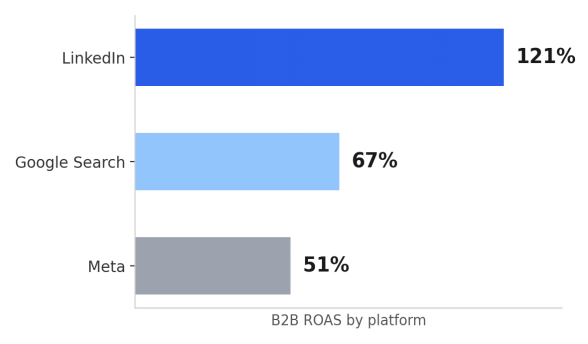
Paid - LinkedIn delivers 121% B2B ROAS, the highest of any paid social platform, vs. 51% for Meta and 67% for Google Search. Meta is the cheaper option for retargeting an already-warm audience (Dreamdata, 2026)
GEO / AEO - 48% of B2B marketers are experimenting with GEO and 44% are actively operationalizing it; 78% report measurable ROI so far (GNW Consulting/Demand Metric survey of 225 B2B marketers, 2026)
Referral - Referred customers show 37% higher retention; referral programs can cut CAC by up to 80% vs. traditional channels
A quick note on "paid," since it gets used as a catch-all: paid search (Google) and paid social (LinkedIn, Meta) behave very differently and shouldn't be measured against each other on the same scorecard. Paid search captures existing intent, paid social builds it. Within paid social, LinkedIn and Meta also play different roles, LinkedIn for precision targeting of buying committees, Meta for cheaper, high-volume retargeting once someone's already engaged.
The gap between a landing page's average conversion rate and what LinkedIn's native Lead Gen Forms actually convert at illustrates the point well.
It's tempting to read all this as "just add more channels." But the measurement problem compounds the channel problem. As more teams adopt multi-touch attribution, the credit each channel actually deserves keeps shifting.
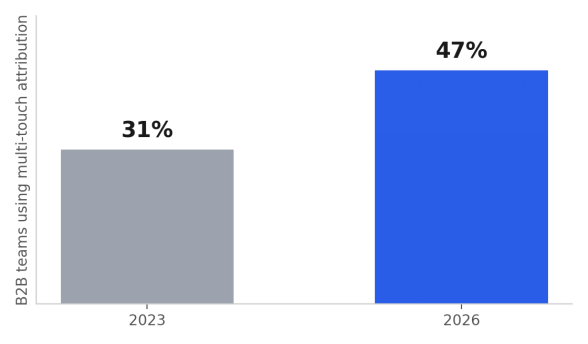
More adoption of multi-touch models is consistent with a wider shift documented by Marketing LTB's 2026 attribution research, which puts average B2B buyer engagement at 15 to 25 measurable interactions before a deal closes. One channel rarely gets full credit for a journey that long.
Find Out Which of Your Channels Are Actually Driving Revenue
Get a free channel and attribution audit across your current marketing mix.
It would be easy to read the data above as "do more of everything." The research doesn't support that either. A separate 2026 analysis found last-click reporting can overstate paid search's contribution by 40–65% while understating content marketing's real influence by 150–300%. Adding channels without fixing measurement just adds more misattributed activity.
That's the fix hiding underneath "our channels aren't converting": it's rarely a channel problem, and it's rarely solved by adding a new one. It's a measurement problem. Your reporting needs to reflect the full journey before budget decisions are made on top of it.
Across the channel audits we run, the strategies that consistently outperform share three traits:
1. They concentrate, not spread. Three to five well-resourced channels beat ten thin ones, in budget, in content quality, and in measurement clarity.
2. They pair a long-term channel with a direct-response one. SEO or LinkedIn for visibility, email or paid for conversion, so the funnel isn't dependent on one motion.
3. They measure across the full journey, not the last click. Teams running any form of multi-touch view catch channels that are working long before the CRM would credit them.
This is where the research meets our own client work, and it's worth separating the two clearly: the numbers above are external research, this part is our direct experience running channels and attribution audits for B2B clients. When we take on a new account, one of the first things we do is map every touchpoint a buyer would realistically hit against what the CRM is actually crediting.
Across the audits we've run this year, the most common gap isn't a missing channel. It's a channel quietly working while getting zero credit, most often social or organic content, because the CRM only logs the final touch before a form fill.
• Judging a channel's performance purely on last-click reporting, most of its real influence happens earlier
• Adding a new channel before fixing how the existing ones are measured
• Spreading budget across ten-plus channels instead of resourcing three to five properly
• Treating paid spend as a growth driver instead of an amplifier for what's already converting organically
A mid-market B2B services client came to us convinced their paid search program was their best channel and their LinkedIn presence "wasn't converting." A full-funnel audit told a different story, most closed deals had a LinkedIn touchpoint, an organic search visit, or both, weeks before the paid search click their CRM was crediting.
That didn't mean LinkedIn had to carry the whole funnel alone. We layered Meta retargeting against site visitors and LinkedIn-engaged audiences, which brought cost per qualified lead down further on the warm end, while LinkedIn kept doing the heavier lifting on precision targeting and lead quality. That split matches what the broader 2026 data shows across B2B paid social,
Once we rebuilt their reporting around a multi-touch view, LinkedIn and SEO were reallocated a combined 40% more budget, and paid search's role shifted from "primary driver" to "closer," which the data had shown it was doing all along.
What most dashboards show - What the fuller data shows
Paid search as top-converting - Paid search often closes deals LinkedIn or SEO already influenced
LinkedIn as "dated" or low-converting - LinkedIn posts the highest B2B paid social ROAS of any platform (121%), Meta is the cheaper retargeting layer, not a replacement
One channel "winning" - 3-5 well-run channels beat 10+ scattered ones
A single conversion event - 15–25 touchpoints on average before a deal closes
We're Rovert Digital, a holistic digital growth agency. The pattern above, strong channels getting undervalued because of how they're measured, is one of the most common gaps we find in a new account, and it changes where budget should actually go: not toward another new channel, but toward proving which current channel is really doing the work.
If your channel mix looks scattered, or your best channel on paper doesn't match what your team feels is working, that's exactly what we'd look at first.
Get a Free Channel and Attribution Audit
We'll show you which channels are actually driving revenue, and which are just getting the credit.
1. Which B2B marketing channels convert best right now?
LinkedIn and SEO build the strongest long-term demand, while referrals close at the highest rate. Paid ads work best paired with a channel that's already proven, not run alone.
2. How many marketing channels should a B2B company use at once?
Three to five channels run well outperform ten or more run thinly, per 2026 research from Callbox. Focus beats breadth in B2B marketing.
3. Why does last-click attribution undercount some channels?
Last-click gives 100% credit to the final touchpoint before conversion, usually paid search or a direct visit, hiding the earlier influence of LinkedIn, SEO, and referrals.
4. What's the difference between SEO, AEO, and GEO?
SEO ranks web pages in traditional search results, AEO targets direct answers in voice search and featured snippets; GEO focuses on being cited inside AI-generated answers from tools like ChatGPT and Google AI Overviews.
5. Is content still worth creating if AI tools answer most buyer questions directly?
Yes, AI tools pull their answers from existing content, so being a clearly - structured, citable source is what drives visibility now. Losing the click doesn't mean losing the influence.


